
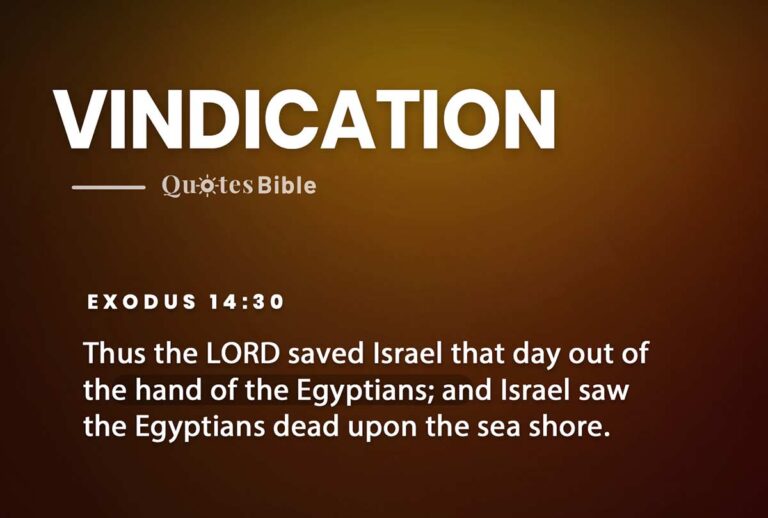
In a world fraught with injustice and moral ambiguity, the concept of vindication resonates deeply, especially within the Biblical context. Vindication, at its essence, signifies a restoration of justice, an affirmation that the moral order will ultimately prevail. This article explores the multifaceted meanings of vindication in the Bible, delving into themes of justice, redemption, and divine intervention.
Throughout the sacred texts, the notion of vindication often emerges alongside narratives of suffering and adversity. Why does the concept captivate the human spirit? Perhaps it stems from our innate desire for fairness and recognition—an acknowledgment that wrongdoings do not go unpunished and that the oppressed will see justice. The Hebrew and Christian scriptures are replete with stories that underscore this theme, providing both a historical foundation and a spiritual framework for understanding the complexities of divine justice.
In many passages, vindication can be seen as God’s assurance that righteousness will ultimately triumph over wrongdoing. For instance, Psalms are rich with expressions of longing for vindication. The psalmist frequently cries out, seeking reassurance that God will defend the innocent and punish the wicked. Such verses serve to remind believers that, even when trials arise, faith in divine justice will lead to ultimate redemption.
The story of Job is a profound examination of vindication and divine justice. Job, a man of great faith, finds himself beset by inexplicable suffering. His friends argue that suffering is a punishment for sin, yet Job maintains his innocence. The resolution comes not only through his personal restoration but also through God’s reaffirmation of Job’s integrity. This narrative encapsulates the essence of vindication: that justice does prevail, though it may not come in the forms we initially desire. It suggests that divine timing and human patience are paramount in understanding the broader scope of justice.
Moreover, the New Testament introduces the theme of vindication through the lens of Jesus Christ. His crucifixion may initially appear as a flagrant miscarriage of justice; however, it metamorphoses into a profound vindication. The resurrection stands as a powerful testament that apparent defeat can be transformed into ultimate victory. In moments of despair, the promise of resurrection offers believers a profound sense of hope, an assurance that their trials are transient and that justice will ultimately be served.
Throughout the Gospels, Jesus conveys messages of spiritual vindication for the marginalized and oppressed. He heralds a kingdom where the last shall be first, and the meek shall inherit the earth, presenting a radical reordering of societal values. This revolutionary perspective frames vindication not merely as the esoteric favor of God but as a tangible experience that uplifts the downtrodden, showcasing a divine commitment to justice for all segments of humanity.
Furthermore, the Apostle Paul articulates the concept of vindication in his letters, grappling with themes of faith and works. In Romans, he posits that believers are justified—that is, vindicated—through faith in Christ rather than by their own deeds. This theological stance amplifies the idea that vindication is not solely a result of human actions but is a manifestation of divine grace. Such an understanding profoundly alters the implications of justice, inviting believers to embrace a relationship with the divine that transcends meritocracy.
The theme of vindication also resonates in the imagery of divine justice illustrated in Revelation. Here, the ultimate judgment reveals a God who balances mercy with justice. The eschatological vision depicted confronts humanity with the reality that every action has eternal significance. This reinforces the idea that vindication is not merely an ephemeral state but an enduring promise that instills hope amidst uncertainty. The finality of divine justice serves both as a comfort and a warning, motivating individuals to live ethically while providing assurance that wrongdoing will not escape divine scrutiny.
However, the fascination with vindication in the scripture invites a broader reflection on the human experience. Life often presents hardships, betrayals, and injustices, leading many to question the existence of a just God. The Biblical narrative does not shy away from addressing this tension; instead, it acknowledges the reality of suffering alongside the assurance of eventual vindication. This duality provides a rich tapestry of understanding that invites believers to embark on a journey of faith through adversity, recognizing that injustices may serve a purpose known only to the divine.
In sum, vindication in the Bible encompasses justice, redemption, and the assurance that righteousness will prevail. It is a theme woven intricately throughout the narratives, offering meaningful reflections for individuals grappling with their own quests for justice. As this exploration demonstrates, the call for vindication resonates on both personal and communal levels, challenging believers to embrace a faith rooted in the promise of divine justice. Thus, the concept of vindication remains not merely an abstract theological notion but a profound source of hope and empowerment that transcends time and circumstance.












