
Imagery in scripture often evokes profound emotions and illustrates moral principles in striking ways. One such evocative phrase is “weeping and gnashing of teeth,” used to depict deep anguish and despair. But what does this expression truly signify? Is it merely poetic flourish, or does it encapsulate a more nuanced reality? As we delve into this biblical imagery, we shall explore its origins, implications, and the weighty lessons it conveys within the context of biblical literature.
To comprehend the phrase, one must first identify its biblical roots. “Weeping and gnashing of teeth” appears prominently in the New Testament, specifically in the Gospels of Matthew and Luke. This vivid expression serves as a powerful metaphor for suffering and regret, particularly as it pertains to the fate of those deemed unrighteous or unworthy. The phrase conjures images of profound sorrow, wherein tears symbolize anguish, and gnashing of teeth conveys furious frustration or remorse. The interplay between these two actions encapsulates a visceral emotional response to dire circumstances.
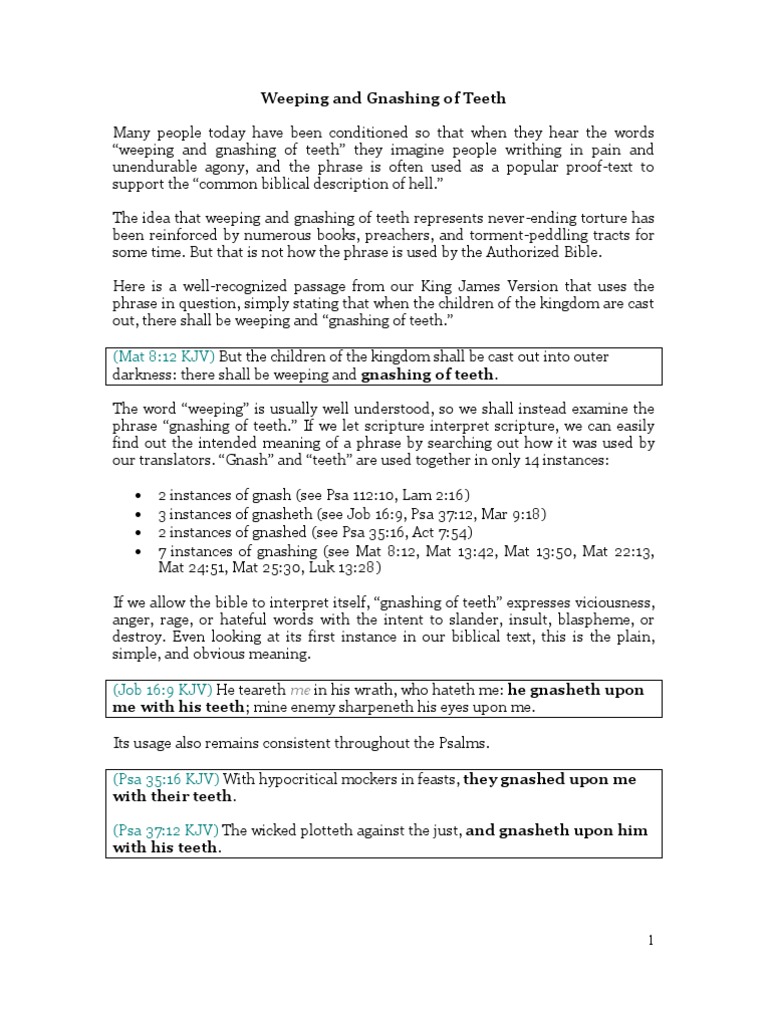
The biblical contexts in which this phrase appears are equally significant. For instance, in Matthew 8:12, it is stated, “But the children of the kingdom shall be cast out into outer darkness: there shall be weeping and gnashing of teeth.” Here, the focus is on the consequences faced by those who reject divine authority. The image of outer darkness evokes a place of exclusion and separation from the divine light, while the accompanying weeping and gnashing of teeth underscore the torment profound enough to provoke such visceral reactions. This stark warning serves to underscore the gravity of spiritual neglect and the repercussions of turning away from divine commandments.
Additionally, Matthew 22:13 amplifies this sentiment when it recounts the parable of the wedding feast, where a guest arrives without proper attire. In response to this breach of etiquette, the king orders him bound and cast away, declaring, “For many are called, but few are chosen.” This narrative not only highlights the importance of being prepared for the divine invitation but also illustrates the dire consequences of failing to meet the spiritual expectations imposed by God—resulting in the proverbial weeping and gnashing of teeth.
In broader theological discussions, “weeping and gnashing of teeth” vividly symbolize eternal separation from God, a theme prevalent among discussions of hell and judgment. The anguish portrayed is not merely physical suffering; instead, it embodies a spiritual crisis resultant from irrevocable choices. The gnashing of teeth suggests a deep-seated anger or bitterness, perhaps directed towards oneself or the circumstances that led to an unsatisfactory spiritual state. Similarly, the weeping indicates heartbreak—facing the stark reality of separation from divine grace or eternal damnation evokes both sorrow and regret.
The challenge posed by this biblical imagery is multifaceted. How does one reconcile the existence of such a grim description of eternal consequence with a loving and merciful God? It introduces a profound theological dilemma: the balance between justice and mercy. For many, the concept of hell and its attendant sufferings can be a source of contention. The belief in a loving God coexists with the belief in divine justice, raising questions about human agency, free will, and the nature of punishment. If God is loving, how can He permit such suffering?
Some theologians posit that the “weeping and gnashing of teeth” metaphor indicates the inherent consequences of estrangement from God. It is not a capricious punishment but rather a reflection of existential separation from the source of all that is good and fulfilling. In this view, the imagery serves as a stark reminder of the spiritual stakes involved in the choices individuals make throughout their lives.
This imagery also invites introspection on the human condition. It compels one to reflect on the nature of regret and remorse—feelings we all experience at various moments. When faced with substantial life choices, can we sometimes feel as though we are on the precipice between joy and despair? The emotions encapsulated in “weeping and gnashing of teeth” resonate with those who feel burdened by past decisions or the implications of their choices on their spiritual journey.
Ultimately, the phrase functions as both a warning and a reflection of the human experience. It serves to challenge individuals to ponder their lives, the authenticity of their faith, and their preparedness for what lies ahead. It’s an admonition to consider deeply the implications of living in accordance with God’s will while also embracing the hope inherent in redemption.
In conclusion, “weeping and gnashing of teeth” eloquently encapsulates the essence of anguish and consequence in biblical literature. Through its rich and multi-dimensional imagery, it confronts the profound realities of spiritual estrangement and the resulting emotional turmoil. It ignites a deeper inquiry into the nature of divine justice, human agency, and the eternal weight of our choices. Let this phrase resonate as a call to reflection, urging a sincere engagement with our spirituality amid the joys and tribulations of existence.












