
When examining invoices and legal documents, you may encounter the phrase “without prejudice.” This terminology, often inscrutable to the uninitiated, holds significant weight in the legal realm. This article delves into the significance of the term, particularly as it relates to invoices, and enlightens readers on its implications and applications in legal contexts.
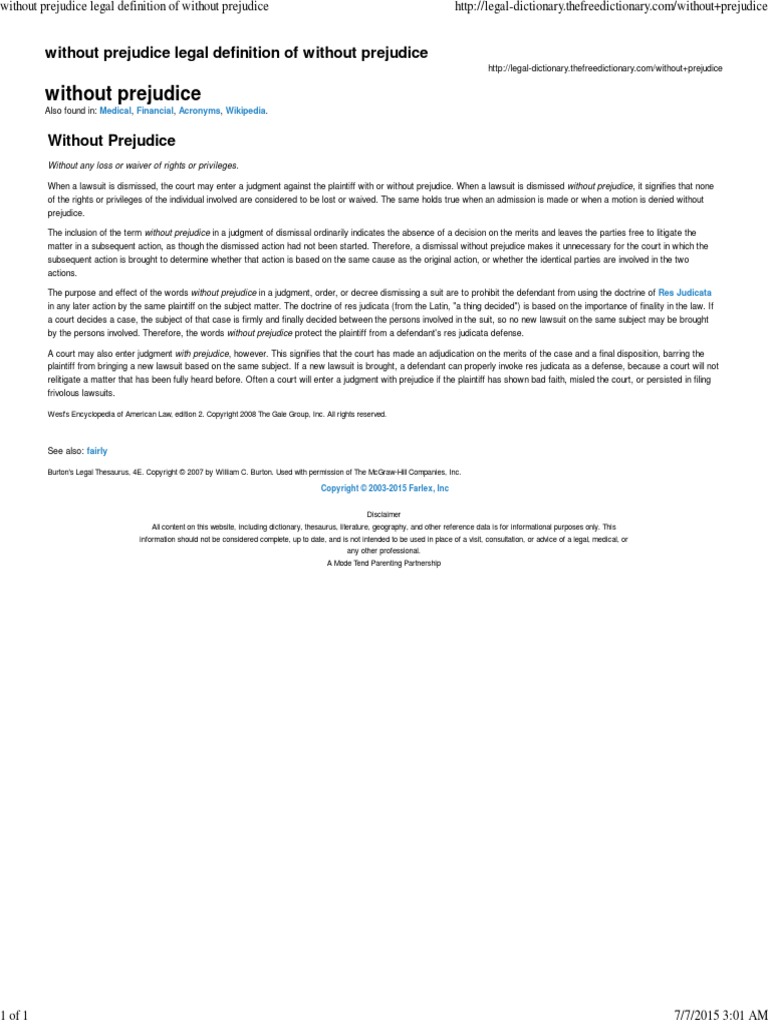
Firstly, let us dismantle the phrase “without prejudice.” In legal parlance, it denotes that a statement or communication cannot be used as evidence in court proceedings. This precautionary measure seeks to protect parties from the potential repercussions of disclosing their positions prematurely, thereby allowing for candid discussions during negotiations.
When applied to an invoice, the phrase takes on nuanced meanings. It can be pivotal in clarifying intentions and safeguarding the issuer’s legal rights. For instance, including “without prejudice” on an invoice may signify that the sender is negotiating payment terms or amounts without waiving any rights to recover the full debt should the negotiations fail. This provision fosters a more open dialogue, ensuring that both parties remain forthright without the specter of future liability looming over them.
Understanding the legal framework surrounding this term is crucial to grasping its implications. “Without prejudice communications” is a well-recognized legal principle in many jurisdictions. The essence of this principle lies in its ability to facilitate settlement discussions, allowing parties to exchange offers and counteroffers without the fear that these discussions will be later exploited in court. Therefore, when you spot this phrase on an invoice, it signifies an invitation to engage in negotiations while preserving the right to seek full payment through legal avenues if necessary.
This practice can extend to various scenarios, including business-to-business transactions, where clients and vendors may find themselves at odds over payment disputes or the scope of services rendered. Including “without prejudice” in such contexts serves as a strategic approach, encouraging cooperative resolution instead of adversarial litigation.
However, the scope of this legal protection is not limitless. The effectiveness of the “without prejudice” label can be contingent upon several factors, including the intentions of the parties involved and the prevailing jurisdiction’s interpretation of the doctrine. Courts typically scrutinize the context in which the term is employed, focusing on whether there are bona fide negotiations taking place. Consequently, if the invoice suggests a mere pretense of negotiation, the “without prejudice” claim may be rendered moot.
Moreover, it is essential to discern that not all parties may fully comprehend the implications of using this legal jargon. Clients receiving an invoice marked “without prejudice” might interpret it in varying ways. Some may perceive it as a simple formality, while others might recognize it as a signal that negotiations are underway, thereby prompting a more cautious approach. This potential for ambiguity highlights the importance of clear communication in business dealings. Parties should strive to elucidate their intentions alongside such legal phrasing, ensuring that everyone is on the same page.
Additionally, the inclusion of “without prejudice” can manifest as a double-edged sword. While it can protect the issuer’s rights, it may inadvertently create a perception of mistrust or legal maneuvering among clients. Careful consideration should be granted to whether such legal phrasing aligns with the desired relationship between the parties involved. For those keen on fostering goodwill and collaboration, stipulating “without prejudice” might seem overly confrontational, depending on the context.
In practice, one should approach the application of “without prejudice” with a tactical mindset. Consider a scenario where a freelancer submits an invoice to a client, marked with “without prejudice.” The freelancer is, in essence, signaling that they wish to enter into negotiations regarding payment terms. If the client engages in the negotiation sincerely, both parties can reach a satisfactory resolution without fearing that prior statements will backfire if the discussion devolves into conflict.
However, should negotiations fail, the freelancer retains the right to pursue legal avenues to recover the full amount due. This understanding grants an assurance that informal negotiations do not dismantle the underlying legal structure for recovering owed funds. Such a framework profoundly benefits both parties by balancing the need for open dialogue with the legal protections entitled to both the haggler and the owed.
To maximize the efficacy of the “without prejudice” label on invoices, parties should consider supplementing this terminology with clear descriptions of the services rendered and the payment terms proposed. By articulating the groundwork for negotiation alongside the legal protection offered by the phrase, both parties may navigate the ambiguities inherent in any financial transaction with greater clarity.
In conclusion, understanding the term “without prejudice” in the context of invoices opens up a realm of transparency and negotiation, allowing parties to engage candidly while safeguarding their legal interests. By mastering this legal jargon and articulating clear intentions, businesses and individuals can foster relationships built on trust and accountability, transforming potentially contentious disputes into collaborative resolutions. As such, the next time you encounter this phrase, take a moment to reflect on its implications, and consider how it might shift the dynamics of your financial dealings.












