
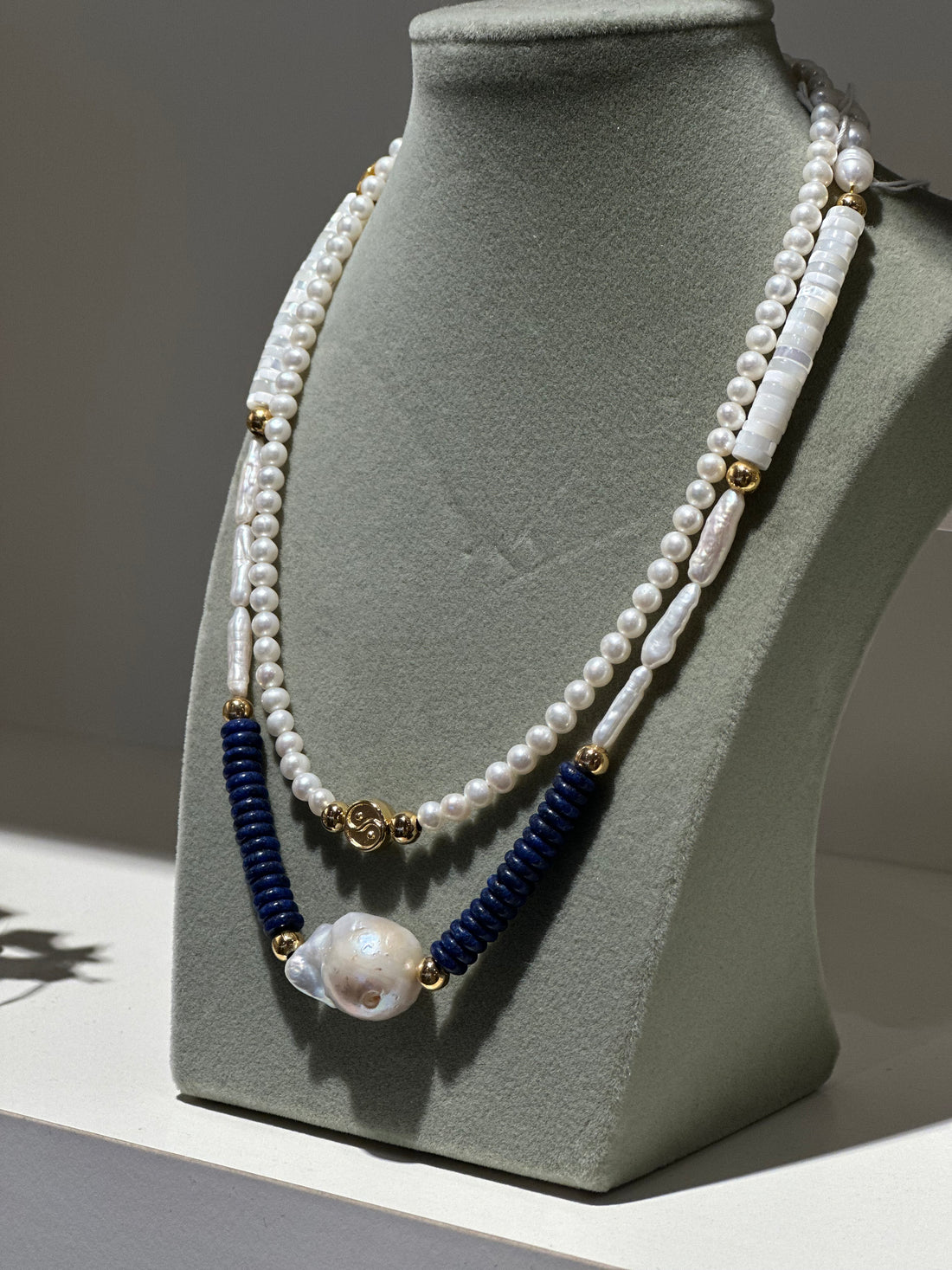
Enigmatic yet elegant, the pearl necklace stands as a timeless emblem of sophistication—an accessory woven into the fabric of history, culture, and natural beauty. To delve into the essence of this exquisite piece is to explore not just its aesthetic appeal, but also the rich tapestry of symbolism and meaning that has accompanied pearls through the ages.
Nature’s Teardrops: The Formation of Pearls
Pearls are the exquisite gifts of the ocean, born from the delicate interplay between an irritant and the resilient mollusk. When foreign objects, such as a grain of sand, infiltrate the shell of a mollusk, it reacts by secreting layers of nacre, the shimmering substance that encases the irritant. Over time, this natural process transforms the foreign intruder into a lustrous pearl—a testament to endurance and beauty in the face of adversity. This serendipitous creation mirrors life itself, where challenges often culminate in profound beauty.
The Historical Significance of Pearls
Throughout history, pearls have been revered by numerous civilizations. In ancient Rome, they were synonymous with wealth and power, worn by emperors and dignitaries as symbols of superiority. Cleopatra, the legendary queen of Egypt, supposedly dissolved a pearl in vinegar to impress Mark Antony. This act of opulence underscored not only the rarity of pearls but also their capacity to elevate status.
In Asian cultures, particularly within China, pearls were deeply integrated into tradition, symbolizing purity, wisdom, and enlightenment. They adorned the robes of emperors and were a staple in bridal jewelry, imbuing the union with auspiciousness and prosperity. Thus, pearls have traveled across borders and eras, embodying a kaleidoscope of meanings that resonate with diverse cultures.
Symbolism of the Pearl Necklace
When one contemplates a pearl necklace, it is essential to consider the myriad symbols associated with these glistening orbs. First and foremost, pearls epitomize purity and innocence—a belief entrenched in various cultural narratives. For many, wearing a pearl necklace evokes a sense of tranquility and grace, bestowing the wearer with a feeling of calmness and serenity.
The layering of pearls in a necklace does more than merely enhance aesthetics; it signifies a plethora of things. Each pearl represents experiences, memories, and the passages of life. Just as a strand of pearls grows with time, so too does wisdom accumulate through life’s journeys. The necklace itself becomes a chronicle, a narrative reflecting the essence of personal evolution.
Moreover, the metaphor of the pearl as a “teardrop of the sea” adds another poignant layer to its symbolism. This imagined image constructs a connection between the ocean’s depth—its secrets, its mysteries—and the emotional facets of the human experience. Every tear shed can ultimately yield strength and resilience, much like the pearl emerging from the mollusk’s strife.
Cultural Interpretations of Pearl Necklaces
Across continents, pearls hold unique cultural meanings. In Western societies, a pearl necklace is often perceived as a rite of passage, marking significant life events such as weddings or graduations. The classic image of a bride adorned with pearls on her special day encapsulates romantic ideals, symbolizing love, fidelity, and a bright future. Each pearl transcends mere decoration; it embodies enduring commitment.
In contrast, in some Eastern traditions, pearls are seen as a conduit for divinity. They are believed to enhance one’s spiritual connections, acting as amulets that ward off negativity and promote positivity. The luminescence of pearls, reflecting the light in an almost ethereal manner, renders them not just objects of beauty but also carriers of sacred energy.
The Aesthetics of Pearl Necklaces: A Versatile Adornment
The unique allure of pearl necklaces lies in their unparalleled versatility. Whether paired with a casual outfit or donned for a grand occasion, they effortlessly elevate any ensemble, instilling a sense of elegance and poise. Their timeless beauty transcends fleeting fashion trends, making them perennial favorites among jewelry lovers.
Moreover, the spectrum of styles—from classic strands of uniform pearls to avant-garde designs that intersperse pearls with unconventional materials—offers an array of choices for the discerning wearer, allowing for personal expression and creativity.
Choosing the Ideal Pearl Necklace
When selecting the perfect pearl necklace, one must consider factors such as size, color, and shape. Each element contributes to the necklace’s character and the story it encodes. For example, larger pearls often signify boldness, while smaller pearls reflect subtleness and grace. The choice of color—from ethereal whites to the deeper hues of black or gold—also infuses the necklace with individuality and imbues it with the wearer’s personality.
Conclusion: Beyond Ornamentation
The pearl necklace is more than a mere ornament; it is a multifaceted symbol, rife with meaning and a testament to human experience. Each pearl serves as a reminder of resilience, purity, and the transformative beauty that can arise from life’s challenges. As such, adorning oneself with a pearl necklace transcends the act of dressing up; it becomes a ritual of connection to history, culture, and the very essence of one’s own narrative. In the delicate luster of these ocean gems lies an invitation—to celebrate life in all its richness, reminding us of the beauty that can emerge from even the most unlikely circumstances.












