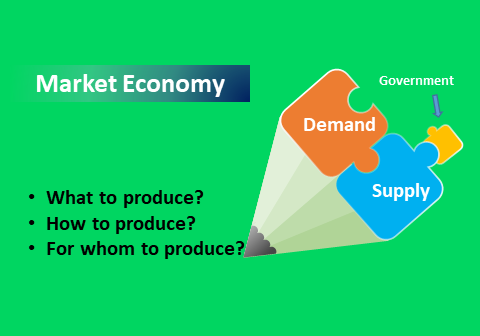
Market economies are thriving entities characterized by the dynamic interplay of supply and demand, where the forces of consumer preferences and producer responses orchestrate the allocation of resources. To digest this intricate system, one must first grasp the seminal elements defining a market economy. By examining distinct examples, we can develop a deeper understanding of how these economic frameworks function in reality.
One quintessential example of a market economy is the United States. Embracing capitalism, the U.S. showcases an elaborate tapestry woven from myriad businesses, ranging from colossal corporations to micro-enterprises. In this environment, decisions on production and pricing stem significantly from consumer demand. When individuals choose to purchase a product, they signal its value; conversely, a lack of interest leads to dwindling production. Thus, the U.S. market economy manifests a continuous feedback loop, whereby businesses adjust their offerings in response to consumer behavior.
In exploring the characteristics that define a market economy, several fundamental principles emerge:
- Voluntary Exchange: Transactions occur when parties agree on the value of goods and services, facilitating mutually beneficial exchanges.
- Private Property: Individuals own resources and have the right to utilize or sell them, which fosters innovation and efficient resource management.
- Competition: A plethora of businesses vying for consumer dollars ignites innovation and price reduction, ensuring quality and diversity in product offerings.
- Minimal Government Intervention: Regulatory frameworks exist but the market largely self-regulates through competition and consumer choice.
Each of these traits bolsters the efficacy of the market economy, cultivating an environment rich in opportunities and innovations. However, no economic system is devoid of pitfalls, and the market economy is no exception. Understanding these disadvantages aids in comprehending the system’s complexities.
For example, while competition stimulates creativity, it can also lead to monopolistic behaviors where entities manipulate markets and stifle innovation. Moreover, inequalities may arise as not all players begin the economic race at the same start line. This creates disparities in wealth and access to opportunities, suggesting that while the system emphasizes freedom and choice, it can paradoxically lead to societal challenges.
Another illustration of a market economy can be found in the European Union, where member states like Germany and the Netherlands coexist in a primarily capitalist framework. Each nation maintains a degree of economic sovereignty, yet the market dynamics are interwoven, highlighting how market economies can flourish in interconnected environments. The EU exemplifies the balance between market forces and regulatory frameworks aimed at ensuring fairness, safety, and sustainability.
Within this liberating economic milieu, the decision-making prowess of individuals and companies is paramount. It is in this spirit that entrepreneurship thrives. Individuals imbued with innovative ideas can pave their paths, founded on consumer needs and preferences. Entrepreneurial ventures, small and large, fuel economic growth by creating jobs and fostering technological advancements. The creation of startups, such as tech companies or artisan food producers, illustrates this phenomenon, allowing them to respond swiftly to shifting consumer demands.
Yet, as previously mentioned, a market economy is not entirely free from constraints. Several external factors can influence the workings of such an economy. Fluctuating global markets, sudden shifts in consumer sentiment, and even pandemics can cause ripple effects, demonstrating the interconnectedness of economies. These phenomena underscore the importance of resilience and adaptability within a market-based system. In times of uncertainty, businesses that quickly innovate to meet changing needs can emerge as leaders, while those tethered to outdated practices may falter.
Despite its weaknesses, the allure of a market economy is the sense of agency it bestows upon consumers and entrepreneurs alike. Individuals wield the power to impact the marketplace, choosing where to spend their money and which businesses to support. This transformative power emerges as a core tenet of market economies, empowering citizens to advocate for products that align with their values and preferences.
Investigating the market economies of developing nations reveals further dimensions to the discussion. Countries such as India and Brazil are transitioning from more centrally planned systems to market-oriented frameworks. These nations are experiencing varying degrees of success and challenges, from integrating technology to meet consumer demands to navigating income disparities and ensuring ethical labor practices. The shift toward a market economy spurs growth yet necessitates vigilant oversight to harness potential without exacerbating social inequalities.
In conclusion, the study of market economies unveils an intricate tapestry of characteristics that foster economic dynamism and innovation while also presenting formidable challenges. Through examples from established economies like the United States and the European Union to emerging markets in Asia and South America, it becomes evident that the principles of competition, voluntary exchange, and consumer choice lie at the heart of this economic model. An appreciation of these complexities not only enriches our understanding but also prepares stakeholders to navigate the evolving landscape of global economies effectively.
As the world becomes increasingly interconnected, the realization that market economies are better positioned to respond to consumer needs while fostering entrepreneurship is pertinent. Embracing the advantages while being cognizant of the disadvantages allows for a more balanced approach toward economic prosperity, helping individuals, businesses, and governments alike to thrive in a competitive marketplace.