Alliteration, a literary device that has enchanted writers and poets for centuries, is the repetition of consonant sounds at the beginning of words in close succession. This stylistic technique serves various purposes, from creating rhythm and musicality in language to evoking imagery and emotion. Throughout literature and everyday communication, alliteration can enhance storytelling and make phrases more memorable. In this exploration, we will delve into the nuances of alliteration, examining its types, applications, and intrinsic charm.
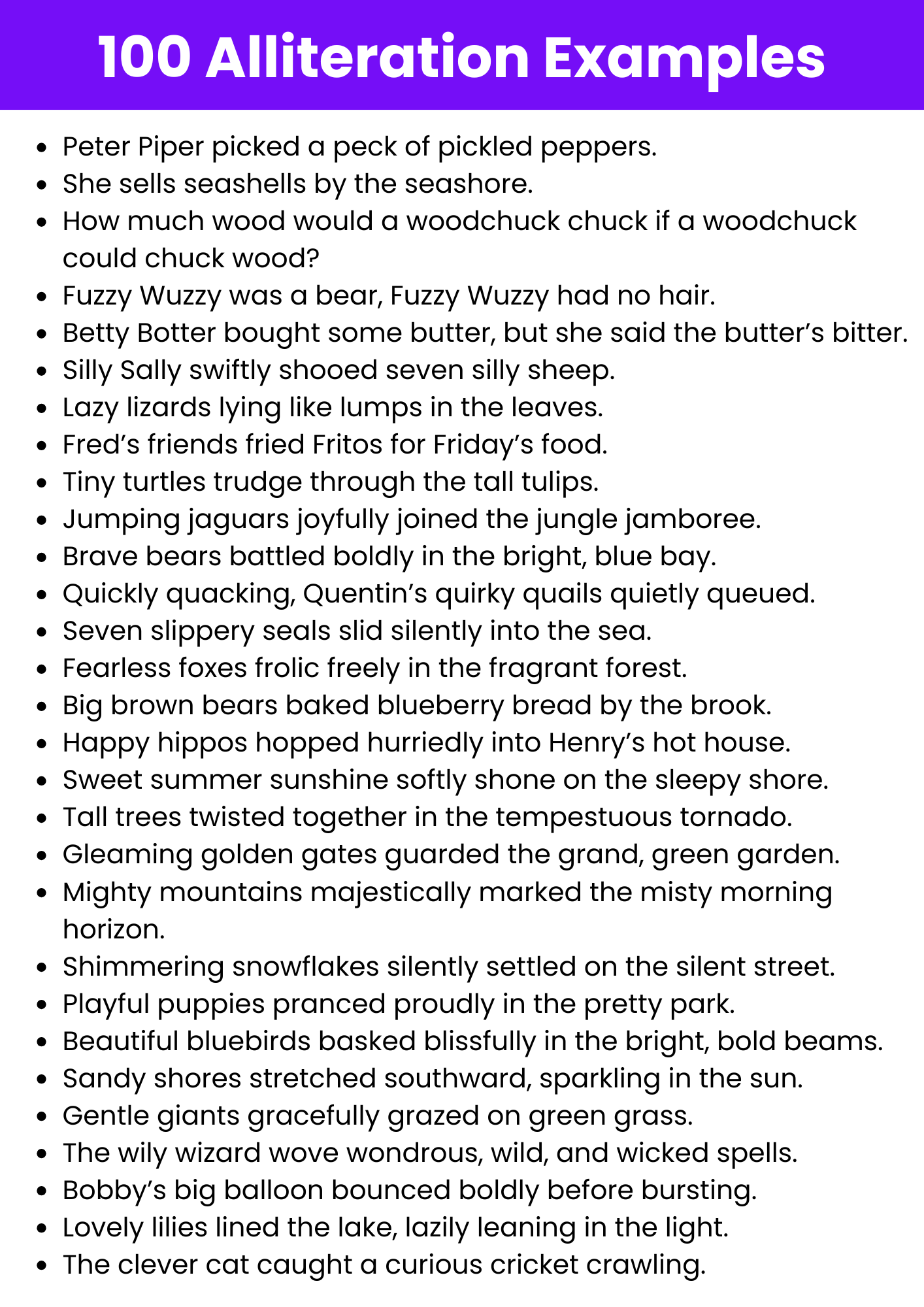
At its core, alliteration is a tool of sound. It draws attention to specific phrases by enveloping them in auditory beauty. By repeating initial consonants, authors can punctuate their prose and inspire an engaging reading experience. A classic example of alliteration is the phrase “Peter Piper picked a peck of pickled peppers.” This whimsical tongue twister illustrates how the repeated ‘p’ sound creates a melodic quality, transforming a simple sentence into an engaging auditory exercise.
Alliteration can be classified based on its usage within various contexts. The most prominent forms include:
- Internal Alliteration: Unlike the conventional pattern found at the beginning of words, internal alliteration occurs within the words of a sentence or phrase. This can enhance the rhythm of a line, as seen in Edgar Allan Poe’s “The Raven,” where the internal consonance contributes to the poem’s somber cadence. The sound echoes through the text, creating an immersive atmosphere.
- Consonance: Though often conflated with alliteration, consonance focuses on the repetition of consonant sounds at the end or middle of words as well. It enriches the texture of language. A great example is found in the phrase “silken, sad, uncertain rustling.” The repeated ‘s’ and ‘r’ sounds enhance the mood and visual imagery, drawing readers deeper into the narrative.
- Assonance: While assonance primarily deals with the repetition of vowel sounds, its combination with alliteration can multiply the effect. The rhythm and flow created through combined sound repetition can leave a lasting impact on the audience. Consider the phrase, “Try to light the fire,” which combines both consonant (alliteration of ‘t’ and ‘l’) and vowel sounds to produce a pleasing auditory experience.
The diverse applications of alliteration extend beyond literature and poetry. Advertisers utilize alliterative phrases to create catchy slogans that linger in consumers’ minds. For instance, “Coca-Cola” or “Best Buy” exemplifies how harmonic sounds can bolster brand identity and recall. The playful use of alliteration in marketing appeals to the subconscious, inviting people to connect more intimately with the product.
Additionally, alliteration finds its place in public speaking and rhetoric. Renowned figures, from Martin Luther King Jr. to Winston Churchill, have wielded alliteration as a potent tool to instill passion and persuasiveness. Dr. King’s iconic “I have a dream” or Churchill’s resolute description of “blood, toil, tears, and sweat” resonate with listeners due to their rhythmic and memorable qualities, eliciting stronger emotional responses.
Moreover, alliteration plays a vital role in children’s literature and nursery rhymes. The rhythmic quality invites young readers to engage with text, feeding their curiosity and sense of adventure. Pieces like “Hickory Dickory Dock” or “Mick McGuire’s mercurial moose” are prime examples where sound and rhythm synergize to spark imagination and foster language development.
Despite its charm, alliteration must be wielded with care. Overuse can lead to a cacophony of sound that detracts from clarity and meaning. Writers should judiciously employ alliteration to enhance their prose rather than overwhelm their audience. The key lies in finding a harmonious balance, ensuring that the rhythm complements rather than eclipses the content’s essence.
In an educational context, the study of alliteration can enrich one’s appreciation for language arts. Understanding how sound affects meaning allows students to craft more impactful narratives. Teachers often engage students in exercises like creating their own alliterative phrases or identifying alliteration in famous literature, promoting both creativity and analytical skills.
Furthermore, alliteration can extend into modern genres such as music and film. Songwriters frequently employ this device to create lyrics that are catchy and impactful, aiding in the storytelling process. Likewise, film titles such as “Finding Nemo” and “The Dark Knight” demonstrate how alliteration can enhance branding, making titles more appealing and memorable.
In conclusion, alliteration is much more than a mere linguistic ornamentation. It is a multi-faceted device that fosters connection, rhythm, and imagery across various forms of expression. From enhancing literary prose and marketing slogans to enriching public speaking and children’s literature, alliteration boasts a versatility that invites exploration and creativity. As we engage with language, recognizing the enchanting quality of alliteration may inspire us to wield it artfully, crafting resonant phrases that echo long after the words have been spoken.