Imagine you’re walking through a lush forest, sunlight filtering through the canopy above, when suddenly a colorful parade catches your eye. A swarm of bees flits from flower to flower, diligently collecting nectar. Nearby, a vibrant bloom stretches its petals wide, inviting these tiny workers. This scenario raises an intriguing question: what if these two apparently distinct entities engaged in a partnership that not only benefits them but also sustains the ecosystem around them? This captivating interaction between species unveils the fascinating phenomenon known as mutualism.
Mutualism, in its essence, could be defined as a symbiotic relationship in which two species interact in a way that is beneficial for both parties involved. Rather than being mere cohabitors of the same space, these organisms collaborate in a manner that enhances their survival, propagation, or overall vitality. This complex interplay often results in a delightful tapestry of life that underscores the intricate web of connections in nature.
One of the quintessential examples of mutualism is found in the relationship between bees and flowering plants. Bees are vital pollinators, tirelessly moving from one bloom to another, transferring pollen that facilitates fertilization. In return for their labor, these industrious insects obtain nectar, a sugary reward that fuels their energy for work and reproduction. This relationship exemplifies the principle of mutualism vividly: bees thrive on the nourishment provided by flowers, while the plants benefit from the enhanced reproduction made possible through effective pollination.
However, the intricacies of mutualism extend far beyond bees and blossoms. Consider the intriguing partnership between clownfish and sea anemones. Within the vibrant embrace of these stinging marine creatures, clownfish find refuge from predators while providing the anemones with nutrients via their waste. This interaction not only serves to protect the clownfish but also strengthens the delicate balance within the marine ecosystem. Such relationships highlight the reciprocal nature of mutualism, where the survival of one species inherently benefits another.
Moreover, the mutualistic relationship is not limited to the animal kingdom. In the realm of the plant world, we encounter the fascinating interplay between certain species of trees and fungi—a relationship known as mycorrhizae. In this ecological alliance, the fungal networks extend through the soil, increasing a tree’s access to essential nutrients and water. In return, trees provide the fungi with carbohydrates produced through photosynthesis. This interconnection is fundamental to forest health; the extensive mycorrhizal networks enable trees to communicate with one another and share resources, demonstrating a remarkable cooperative spirit.
As one delves deeper into the world of mutualism, it becomes apparent that not all interactions are as straightforward as the bee-and-flower duo. For instance, acacia trees form an exceptional partnership with certain species of ants. The ants reside in the hollow thorns of the acacia, providing protection against herbivores and competing plants. The relationship exemplifies an evolutionarily advantageous arrangement where both parties experience enhanced reproductive success and survival. Yet, challenges arise if one species fails to pull its weight, prompting a dynamic tension that propels adaptation and evolution.
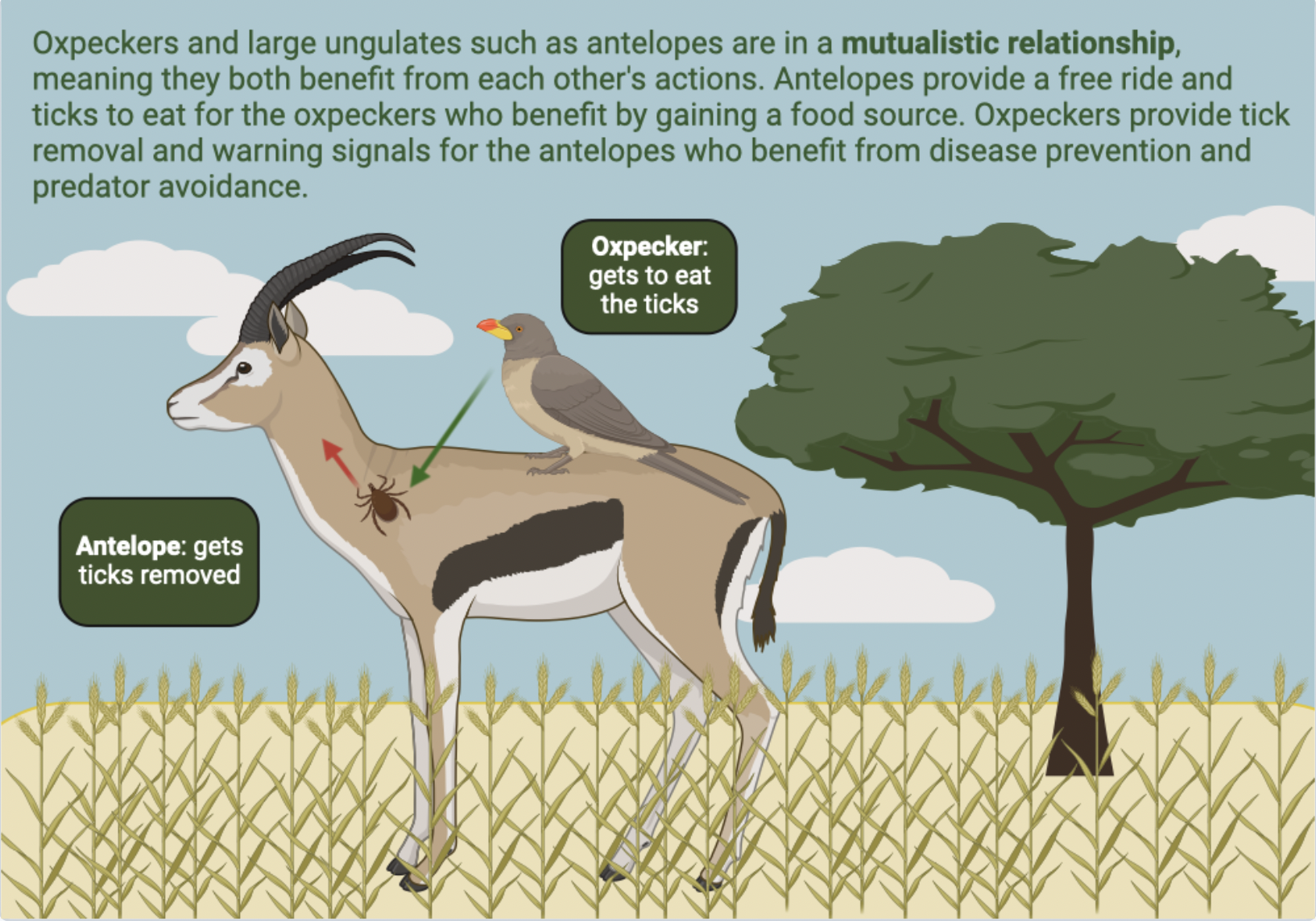
The beautiful tapestry of mutualism extends to the world of mammals as well. Consider the intriguing relationship between oxpeckers and large herbivores like rhinoceroses or buffalo. The tiny birds perch upon the backs of these colossal creatures, indulging in a buffet of ticks, dead skin, and other parasites. This dichotomy is fascinating; while the oxpeckers feast and thrive, the host animals receive hygiene and health benefits from their feathery guests. It’s a win-win scenario that underscores the profundity of ecosystem interdependence.
While the collaboration between species often appears as a harmonious dance, it may also bring to light potential challenges and dilemmas. What happens when the balance of mutualism is disrupted? In some cases, the introduction of non-native species can threaten existing mutualistic relationships. For instance, invasive plant species can outcompete native flora, disrupting the intricate web of interdependent relationships established over millennia. Such disturbances can have lasting repercussions, showcasing the fragility of these partnerships within the greater ecological context.
Nevertheless, we must acknowledge the power of mutualism in sustaining life on Earth. From the buzzing bees ensuring the survival of flowering plants to the deep-rooted relationships among trees and fungi in forest ecosystems, each example underscores the myriad ways species collaborate to thrive. These interconnections stitch the web of life, reminding us of the delicate balance that governs our natural world. Can you envision the overarching significance of these relationships in maintaining biodiversity and ecological harmony?
As we explore the manifestations of mutualism, it becomes evident that these relationships are not merely isolated incidents but rather a vital tapestry woven throughout the natural world. Recognizing the complexity of these alliances not only deepens our understanding of ecological dynamics but also prompts us to reflect on our roles as stewards of the environment. Are we not, at times, also participants in mutualistic relationships with nature? In the grand scheme of life, mutualism serves as a reminder that cooperation often yields the most fruitful of outcomes, weaving a narrative of interconnectedness that is fundamental to the very essence of existence.
In conclusion, examples of mutualism abound, each with its unique story and impact on the broader ecosystem. Whether it’s bees diligently pollinating flowers, clownfish finding sanctuary among sea anemones, or ants and acacia trees working together for mutual benefit, these relationships elucidate the complexities of life on Earth. The challenge posed to us is to appreciate and protect these interwoven connections, fostering a sustainable future for all species, including our own. By celebrating the beauty of mutualism, we embrace the interconnected nature of life and recognize our responsibility to nurture the vibrant ecosystems that sustain us all.