Language, in all its complexity, is a remarkable tool that shapes the way we articulate thoughts, emotions, and ideas. At the core of this intricate tapestry lies a class of words known as adverbs. These words, often overlooked, serve a pivotal role in enhancing the richness of our communication. So, what is an adverb, and what are its vivid manifestations in the English language? This exploration promises a transformative perspective, peeling back layers to unveil the profound significance of adverbs in our daily exchanges.
Adverbs modify verbs, adjectives, or even other adverbs, giving us insight into how, when, where, and to what extent actions occur. They wield the power to transform mundane sentences into vibrant expressions, infusing them with specificity and flair. For example, consider the sentence, “She runs.” While grammatically correct, it lacks depth. Add an adverb, and you can elevate it to “She runs swiftly,” inviting the reader to visualize not just the action but the manner in which it is executed.
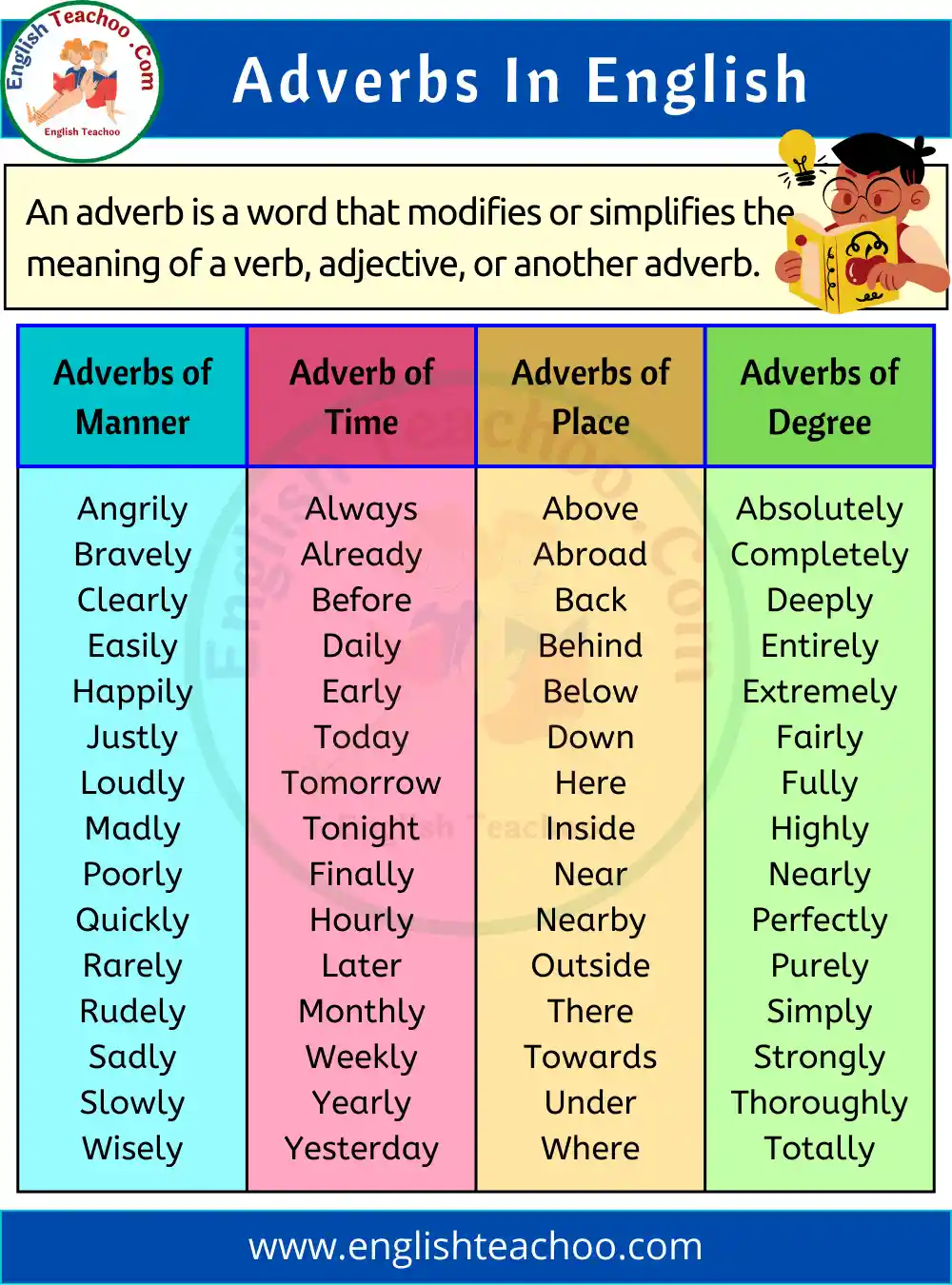
Let’s delve into the categories of adverbs. First, we have adverbs of manner, which describe how an action is performed. Words like “quickly,” “gracefully,” and “clumsily” fall under this category. Each adverb offers a unique lens through which the action can be viewed. “She dances gracefully” instills a sense of beauty, while “She dances clumsily” evokes a different, perhaps more humorous image.
Next, we encounter adverbs of time. These words answer the question of when an action occurs, providing context that can influence the emotional weight of a sentence. Terms such as “yesterday,” “soon,” and “never” are crucial in establishing timelines and urgency. For instance, the phrase “He will arrive shortly” denotes anticipation. Conversely, “He arrived unexpectedly” introduces an element of surprise that can change the trajectory of a narrative.
Adverbs of place direct our focus toward the location of an action. They help ground the reader in a specific context, enhancing the imagery and coherence of the narrative. Consider the distinction between “He searched everywhere” and “He searched nearby.” The former implies a far-reaching quest, while the latter constrains the action to a more intimate space, captivating the reader’s imagination and curiosity.
Then there are adverbs of frequency, which inform us how often an action takes place. “Always,” “often,” and “rarely” offer rich insights into behaviors and habits. When one states, “She often visits her grandmother,” it implies a persistence and sweetness in the relationship, possibly creating a warm resonance with the reader. In contrast, the statement “She rarely visits her grandmother” carries a weight of neglect, subtly shifting the perception of the relationship.
Next, it is essential to discuss comparative adverbs, which allow for the comparison between actions. Phrases like “more rapidly” or “less frequently” provide a nuanced understanding of how actions relate to one another. For example, saying “He drives more cautiously than before” suggests a shift in behavior, possibly inviting speculation on what prompted this change.
To deepen your understanding of adverbs, let’s explore some adverbial phrases. An adverbial phrase is a group of words functioning as an adverb. Take, for instance, “with great enthusiasm,” as in “She approached the task with great enthusiasm.” This phrase portrays not only the action but also the fervor behind it, coaxing the reader to appreciate the subject’s emotional investment.
The beauty of adverbs lies in their flexibility and diversity. They can transform a straightforward narrative into a tapestry of nuanced expression. Consider, for example, the difference in tone between “He spoke softly” and “He whispered cautiously.” The former suggests a gentle demeanor, while the latter introduces an element of hesitation or concern. The subtle choice of adverb can dramatically alter the reader’s perception of a scenario.
Moreover, adverbs can also be employed for dramatic effect, heightening tension or foreshadowing events. Imagine a story where a character is told “You must leave now.” The urgency invoked by the adverb “now” injects immediacy into the dialogue, possibly foreshadowing impending danger or an important revelation. This simple alteration can shift the narrative’s tension, gripping the reader’s attention.
However, while adverbs are invaluable, heed the advice of linguistic purists who caution against adverbial overindulgence. Striking a balance is crucial; overusing adverbs can lead to redundancy and a dilution of the intended impact. Instead, aim for precision—an elegantly placed adverb carries far more weight than a flurry of them.
In conclusion, the world of adverbs beckons with a promise of elevated expression and nuanced communication. These deceptively simple modifiers have the power to transform ideas and emotions, weaving them into a coherent narrative tapestry. Embrace this linguistic artistry, and unlock new dimensions of clarity and vividness in your writing. With a deeper understanding of adverbs, your capacity for connection, persuasion, and storytelling will flourish. Explore further, experiment boldly, and let the adverbial magic inspire your journey through the realms of language.