Natural selection is often likened to a grand gallery of art, where only the most exquisite masterpieces survive the test of time. Just as a curator chooses which works to display, the environment decides which traits are favorable for survival and reproduction. This intricate dance of genes and surroundings tells a story that unfolds through generations, each chapter revealing the beauty of adaptation. But what exactly serves as an example of this compelling phenomenon? Here, we explore various illustrations that encapsulate the essence of natural selection.
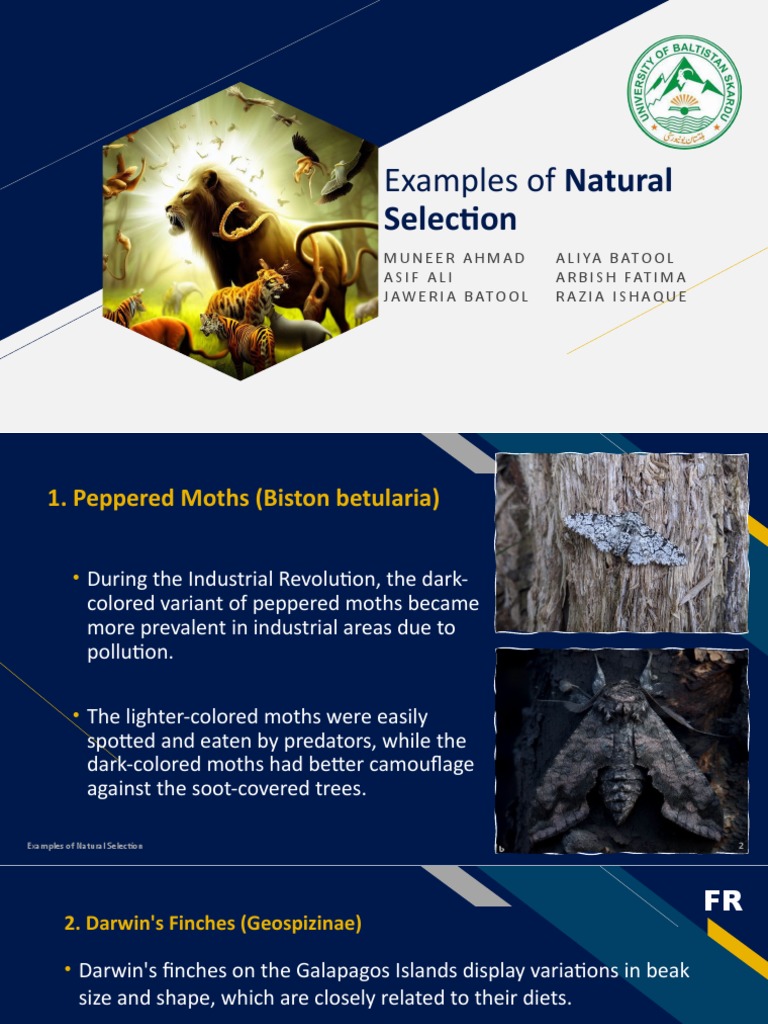
One of the most iconic examples of natural selection is the peppered moth, Biston betularia. In the soot-laden skies of 19th-century England, these moths presented a collage of light and dark wing patterns. Prior to industrialization, the predominantly pale moths, resembling the lichen on trees, had a better chance of evading their predatory bird enemies. However, as pollution blackened the landscape, so too did the fortunes of the darker moths shift. Those with the darker coloration began to thrive, ultimately leading to an astonishing turn of events—the population shifted, and the once-rare darker variant became the most prevalent. This striking transition exemplifies how environmental factors can orchestrate a shift in population dynamics almost like a symphony, where every note signifies life or death, survival or extinction.
Transitioning from the realm of lepidopterans, we can turn our attention to the finches inhabiting the Galápagos Islands, famously studied by Charles Darwin. These avian creatures, each possessing unique beak shapes resembling tools in a toolbox, offer a diverse array of adaptations to their particular diets. During periods of drought, when seeds became scarce, finches with deeper, sturdier beaks—akin to chisels—boasted a competitive advantage, effectively cracking the hard seeds that thinner-beaked counterparts could not. This natural selection not only illustrates the beauty of functional adaptation but also highlights survival in a world that is anything but static. As nature becomes an artist, it crafts these birds, sculpting them according to the whispers of their environments.
Another striking metaphor for natural selection can be derived from the African savanna, home to the illustrious giraffe. Picture a tall, elegant creature, its neck soaring above the grasses. This elongated neck, far from being a mere anatomical curiosity, serves as a crucial instrument for survival. Access to higher foliage provides an opportunity for inspiration that lower-grazing herbivores cannot reach, unlocking a larder of nutrients. The mechanism of natural selection herein favors those individuals with longer necks, as they thrive in their niche, away from competition. This phenomenon, often dubbed “sexual selection,” further compounds the narrative; males with longer necks overwhelm their rivals not just in foraging but also in reproducing, thus perpetuating the trait through generations.
Yet, natural selection’s narrative is not confined to terrestrial environments. The realm of marine biology offers the example of the rock pocket mouse, an unsung hero of evolutionary inquiry. In habitats ranging from pale sands to stark black lava flows, these mice exhibit variations in fur coloration as a direct response to their surroundings. The dark-furred mice blend seamlessly into the obsidian landscape, while those with lighter coats fare better on sandy terrains. It’s a vivid portrayal of adaptability—a real-world manifestation of camouflage as an evolutionary strategy. This ongoing interplay of coloration and predation exemplifies how even the smallest organisms can take center stage in the theater of life.
Transitioning from the animal kingdom to the flora, we encounter the exquisite orchid—a striking example of natural selection at work in the plant world. These enigmatic flowers illustrate a dazzling array of adaptive traits that beckon specific pollinators. Some orchids mimic the physical and chemical cues of female insects, enticing male pollinators to venture into their petals under the impression of securing a mate. This clever ruse not only enhances pollination success but ensures the propagation of the orchid species. Here, natural selection is both a captivating charade and a testament to the splendor of co-evolution. The intricacies of this relationship highlight the profound connections that exist between organisms in a shared ecosystem.
As we venture deeper into natural selection, we cannot overlook antibiotic resistance in bacteria—an alarming, yet fascinating consequence of evolutionary pressure. When exposed to antibiotics, bacteria that possess mutations allowing for resistance become the victors of this microcosmic battle. These resilient strains multiply, proliferating their genetic traits throughout their populations. This phenomenon starkly highlights the adaptability of life; resilience becomes an evolutionary advantage in a world where survival is an arms race against pharmaceutical antiquity. Thus, we see how even the smallest adversaries can alter the course of human health, demonstrating the often-unpredictable paths of natural selection.
In conclusion, natural selection is a dynamic and multifaceted process, sculpting life in myriad ways. Whether through the polarized colors of the peppered moth, the varied beak sizes of finches, the elegant neck of the giraffe, or the cunning mimicry of orchids, nature’s artistry unfolds before our very eyes. It is a relentless journey of adaptation—an epic saga written across the ages. These examples coalesce into a narrative that not only illustrates the delicacies of survival but also beckons us to contemplate the interconnectedness of all living beings in their endless quest for existence. As we marvel at this spectacle of life, we acknowledge that each organism is a brushstroke on the canvas of evolution, forever shaped by the forces of nature.