
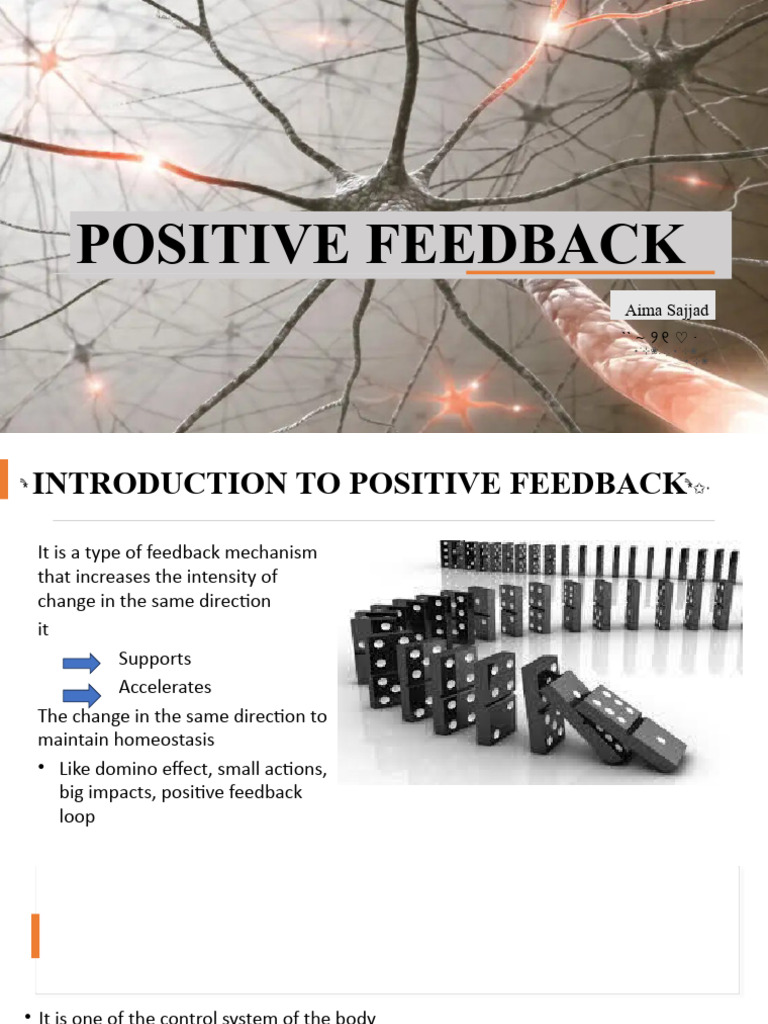
In the intricate tapestry of biological processes and systems, the notion of feedback mechanisms plays a pivotal role. Imagine a finely tuned orchestra where each instrument responds to the maestro’s baton, creating a symphony of sound. Within this context, feedback mechanisms are divided mainly into two categories: negative and positive feedback. While negative feedback serves to stabilize systems, prevent extremes, and maintain homeostasis, positive feedback acts as a catalyst, propelling processes forward like a runaway train. So, which of the following exemplifies positive feedback? To unravel this enigma, we will explore the nuances and implications of positive feedback across various domains.
First, let’s dive deep into the biological realm where positive feedback is essential for specific processes. One of the most quintessential examples lies within the realm of human physiology: childbirth. During labor, the release of oxytocin signals a cascade of contractions in the uterus. Each contraction pushes the baby closer to the birth canal, which in turn triggers the release of more oxytocin. This phenomenon is akin to a snowball effect cascading down a hill, gaining momentum and size as it rolls onward—each layer enhances and amplifies the overall inertia, leading to a remarkable conclusion: the birth of a new life. This biological feedback loop exemplifies the power of positive feedback in nature.
In the context of ecology, positive feedback mechanisms can be observed in certain climatic and environmental phenomena. Take, for instance, the melting of polar ice caps. As global temperatures rise, ice melts, exposing dark ocean waters. These darker surfaces absorb more heat, exacerbating the warming effect. This cycle unfolds like a dance of flames, each flicker igniting the next, leading to potentially catastrophic ecological consequences. The intricacies of such feedback leave us pondering the fragility of our environments and the urgent call for intervention.
Moreover, positive feedback also permeates social dynamics and systems. Consider the concept of popularity in social media. When a post receives likes and shares, it gains visibility, attracting even more engagement. This phenomenon operates like a wildfire, with each spark igniting more flames, overwhelming the landscape of digital interaction. As a result, once a piece of content begins to spread, the momentum can be nearly impossible to curtail. Here lies a vivid example of how human behavior can exponentially amplify certain messages, trends, or movements within society.
Transitions in technology provide yet another lens through which we can observe positive feedback. The rapid advancement of computing capability, often described as Moore’s Law, illustrates this phenomenon effectively. As processors become faster and more efficient, the applications that utilize these advancements blossom. This evolution creates a virtuous cycle where increased capabilities drive further innovations, generating a cascade of technological breakthroughs akin to a chain reaction in a nuclear reactor. Each innovation births new opportunities, further feeding the cycle of progress until we reach astonishing heights of advancement.
In the economic arena, positive feedback loops can be observed in markets. Consider a burgeoning startup that generates significant traction. As its customer base grows, so does its ability to attract investment, which then fuels further expansion and advertising. This creates a feedback loop akin to planting seeds in fertile soil—the initial growth fosters more growth, and as the roots dig deeper, the branches reach higher. Such dynamics are essential for economic growth and innovation, albeit they can lead to market bubbles when the cycle spirals out of control.
However, while positive feedback can catalyze growth and excitement in various fields, it is essential to approach it with caution. The fervor of positive feedback, much like a double-edged sword, holds the potential for both positive transformations and perilous consequences. The cautionary tales of financial markets, social movements, and technological advancements remind us to remain vigilant. The rapid pace of change can leave behind a trail of instability if not carefully managed or moderated.
As we carry this exploration into the future, it becomes apparent that understanding the mechanics of positive feedback is crucial. In our increasingly interconnected world, recognizing these dynamics can empower decision-makers across multiple fields—from policymakers strategizing climate interventions to entrepreneurs fostering innovation. The monochromatic landscape of stability should not overshadow the vibrant chaos brought forth by positive feedback, as this chaos often leads to transformation, enhancement, and growth.
In conclusion, the tapestry of life, technology, society, and economics is interwoven with threads of positive feedback. From childbirth to environmental changes, social media dynamics, technological advancements, and economic growth, positive feedback is an indomitable force. It propels everything forward while simultaneously posing questions about sustainability and ethics. Much like the orchestra referenced earlier, we must learn to conduct the symphony of positive feedback with precision and purpose—balancing the thrilling crescendos with the necessity for stability, creating not only a harmonious existence but also a thriving future.













